
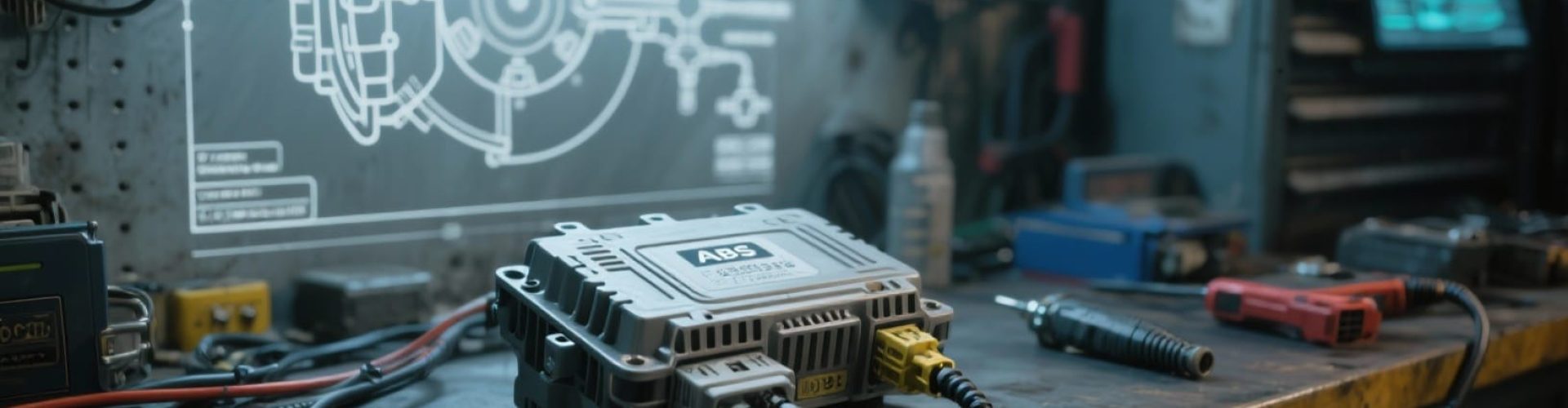
ABS Module Failure Signs – What Drivers Should Look For
The ABS (Anti-Lock Braking System) module plays a critical role in vehicle safety by preventing wheel lockup during braking. When the ABS module begins to fail, it can trigger warning lights, braking irregularities, and communication errors within the vehicle. Recognizing ABS module failure signs early can help you avoid costly repairs and maintain safe braking performance.
What Does the ABS Module Do?
The ABS control module processes data from wheel speed sensors and controls brake pressure during sudden stops. When operating correctly, it helps improve traction, stability, and stopping distance. A malfunctioning ABS module can disrupt these systems and cause warning lights or braking problems.
Most Common ABS Module Failure Signs
1. ABS Warning Light Is On
One of the earliest and most obvious signs of a bad ABS module is an illuminated ABS warning light on the dashboard. This typically indicates a communication issue, internal fault, or stored error code in the module.
2. Traction Control or Stability Control Light
Since the ABS module often communicates with traction control and stability systems, failure can trigger multiple warning lights at once.
3. Speedometer or Gauge Malfunctions
In some vehicles, the ABS module supplies speed data to the instrument cluster. A failing module may cause:
Flickering gauges
Inaccurate speed readings
Speedometer dropping to zero
4. Brake Pedal Issues
Drivers may notice:
A stiff brake pedal
Pulsating brakes at low speeds
Reduced braking assist
While the vehicle may still stop, braking behavior can feel inconsistent or unsafe.
5. Communication Errors During Diagnostics
When scanned, a failing ABS module may:
Not communicate with diagnostic tools
Display internal fault codes
Show wheel speed sensor errors that are not actually sensor-related
This often leads to misdiagnosis and unnecessary sensor replacement.
What Causes ABS Module Failure?
ABS modules fail for several reasons, including:
- Heat damage from the engine bay
- Vibration and solder joint failure
- Moisture intrusion
- Electrical component wear over time
These issues are especially common in older vehicles and certain high-failure manufacturer models.
Can You Drive with a Bad ABS Module?
While your vehicle may still be drivable, operating with a faulty ABS module is not recommended. Without ABS functionality:
- Wheels can lock during hard braking
- Traction and stability control may be disabled
- Emergency braking performance is reduced
Addressing the issue early is always safer and more cost-effective.
ABS Module Repair vs Replacement
Many ABS modules do not need to be replaced. In most cases:
- Internal failures can be repaired
- Communication faults can be corrected
- The original module can be restored to factory function
Repairing your ABS module is often significantly cheaper than dealer replacement and avoids reprogramming issues.
Professional ABS Module Repair Services
At Module Mechanics, we specialize in repairing faulty ABS control modules using advanced diagnostics and testing equipment. Our services include:
- Internal electronic repair
- Error code correction
- Full functional testing
- Plug-and-play return – no additional programming required
Our repair services are available for most domestic and import vehicles.
Contact Us
If you’re experiencing any ABS module failure signs or need help confirming a diagnosis, our team is here to help. Reach out with your vehicle details and symptoms, and we’ll guide you toward the best solution.
Email: support@modulemechanics.com
Location: Littleton, CO — Free US Shipping Available
