
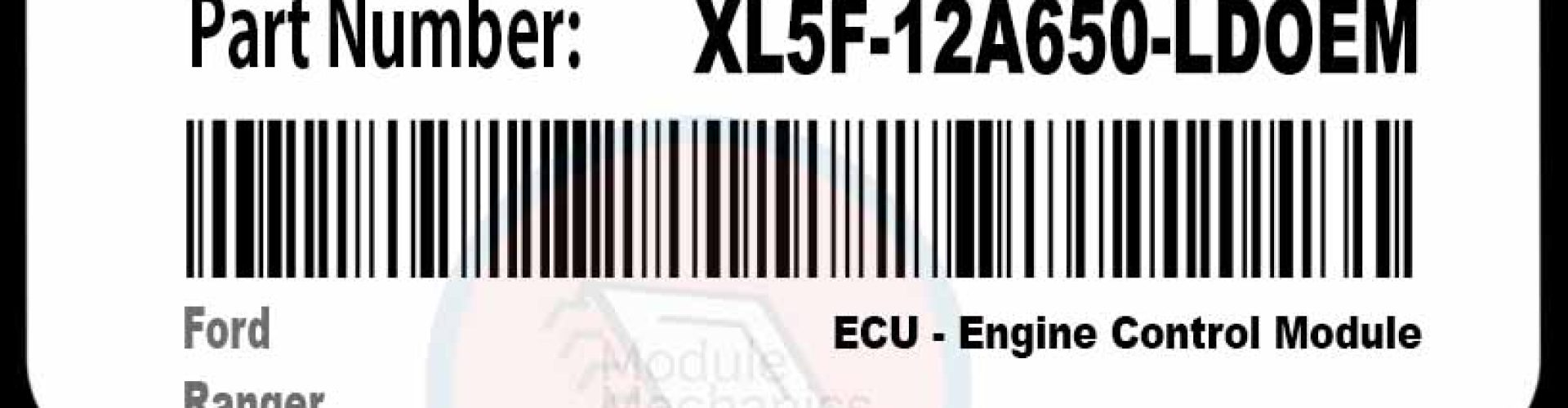
How to Find the Correct OEM Part Number for Your Control Module
Avoid Costly Mistakes When Ordering ECU, BCM, ABS & Other Modules
Choosing the correct module starts with identifying the OEM control module part number. Ordering the wrong part can lead to compatibility issues, no-start conditions, or wasted time and money. This guide explains how to accurately find your module’s part number and ensure a perfect match for your vehicle.
Why the OEM Part Number Matters
Control modules are highly specific to each vehicle. Even small differences can affect compatibility. The OEM part number ensures:
- Exact match to your vehicle’s system
- Proper communication with other modules
- Correct software and calibration
- Reduced risk of installation issues
Relying only on vehicle make and model is not enough — the part number is critical.
Where to Find Your Control Module Part Number
1. On the Module Itself
The most reliable method is to check the original module. Look for:
- Printed label or sticker
- Engraved or stamped numbers
- Manufacturer codes (e.g., Bosch, Delphi, Denso)
The part number is usually a combination of letters and numbers.
2. Using Your Vehicle VIN
Your Vehicle Identification Number (VIN) can be used to:
- Identify the correct module
- Cross-reference OEM part numbers
- Confirm compatibility
Many suppliers and specialists use VIN lookup tools to ensure accuracy.
3. Owner’s Manual or Service Records
In some cases, part numbers may be listed in:
- Vehicle documentation
- Previous repair invoices
- Dealer service records
This can be helpful if the original module is not accessible.
4. Online OEM Catalogs
Manufacturer parts catalogs and trusted automotive databases allow you to:
- Search by VIN or vehicle details
- View compatible part numbers
- Identify superseded or updated versions
Always verify information from multiple sources when possible.
Understanding Part Number Variations
Some modules may have:
- Multiple compatible part numbers
- Updated or superseded versions
- Software variations depending on vehicle configuration
Even if two modules look identical, mismatched numbers can cause functionality issues.
Common Mistakes to Avoid
When identifying your module, avoid:
- Guessing based on vehicle model alone
- Ignoring part number suffixes or revisions
- Ordering used modules without verification
- Assuming all modules are interchangeable
These mistakes often result in additional costs and delays.
OEM vs Aftermarket Part Numbers
OEM part numbers are assigned by the vehicle manufacturer and ensure:
- Full compatibility
- Correct programming requirements
- Reliable long-term performance
Aftermarket part numbers may not always match OEM specifications, which can lead to communication or installation issues.
How Professionals Ensure Accuracy
Automotive specialists typically:
- Verify part numbers directly from the module
- Cross-check using VIN databases
- Confirm compatibility with vehicle systems
- Identify programming requirements
This reduces the risk of incorrect orders and installation problems.
Get the Right Module the First Time
At Module Mechanics, we help customers identify the correct OEM control module part number before repair or replacement. By verifying your module and vehicle details, we ensure compatibility and provide reliable plug-and-play solutions whenever possible.
Contact Us
Not sure how to find your module’s part number? Send us your VIN, module photos, or vehicle details, and our team will help you identify the correct part before you order.
Email: support@modulemechanics.com
Location: Littleton, CO — Free US Shipping Available
